Brown Recluse Spiders in Nashville Homes: Habitats, Identification, and Safety
Learn how to safely identify brown recluse spiders, understand their common hiding spots in Nashville residences, and minimize the risk of bites.
Understanding the Brown Recluse in Middle Tennessee
In Nashville and across Middle Tennessee, encountering spiders indoors is a common part of homeownership. While most domestic arachnids are harmless contributors to the local ecosystem, the brown recluse (Loxosceles reclusa) warrants special attention. Middle Tennessee sits directly within the native geographical range of this species, making it an established, breeding resident rather than an accidental transplant.
Despite their prevalence, brown recluses are frequently misunderstood. Their reclusive nature means they generally avoid human contact, but when living spaces provide warmth, dark voids, and an abundance of prey insects, populations can expand within a home unnoticed. Understanding their biology, identifying their unique features safely, and recognizing where they shelter are critical steps in keeping your household safe.
How to Accurately Identify a Brown Recluse
One of the most frequent challenges in residential pest control is misidentification. Wolf spiders, cellar spiders, southern house spiders, and fishing spiders are regularly mistaken for brown recluses. Because improper identification can lead to unnecessary alarm or misguided control efforts, familiarizing yourself with specific anatomical traits is essential.
The Violin Marking
The most widely recognized physical trait of the brown recluse is the dark, violin-shaped marking on its cephalothorax (the head and midsection). The wider base of the violin begins near the eyes, with the neck of the violin pointing backward toward the abdomen. While this marking is distinctive, it is not foolproof; some harmless species carry faint patterns that resemble a fiddle, and very young recluses may have faint markings.
Eye Arrangement: The Three Dyads
The truest identifier of Loxosceles reclusa is its eye pattern. Most common spiders have eight eyes arranged in two rows of four. Brown recluses, however, have only six eyes arranged in three pairs (known as dyads), with one median pair and two lateral pairs. Examining this feature safely—often by taking a clear, high-resolution photograph on a smartphone rather than leaning in close—is the most reliable way to confirm their identity.
Coloration and Physical Form
Beyond the violin mark and eye pattern, consider these consistent physical characteristics:
- Uniform leg color: Brown recluse legs are uniformly light to medium brown without stripes, bands, or mottled coloration.
- Smooth appearance: Their legs do not feature large, stiff spines, though they are covered in fine, microscopic hairs that give them a soft, velvet-like texture.
- Body size: An adult brown recluse’s body measures roughly a quarter to a half-inch in length, with a leg span approximately the size of a quarter. They are rarely as large as an adult wolf spider or huntsman spider.
- Unpatterned abdomen: The abdomen is solid gray, cream, or light brown, completely free of spots, chevron marks, or distinct geometric patterns.
Typical Habitats Within Nashville Homes
The name "recluse" describes this spider's behavior accurately. They prefer dark, undisturbed microclimates where air movement is minimal and humidity is stable. In residential structures throughout Nashville, brown recluses tend to colonize areas that homeowners rarely disturb.
Attics and Crawl Spaces
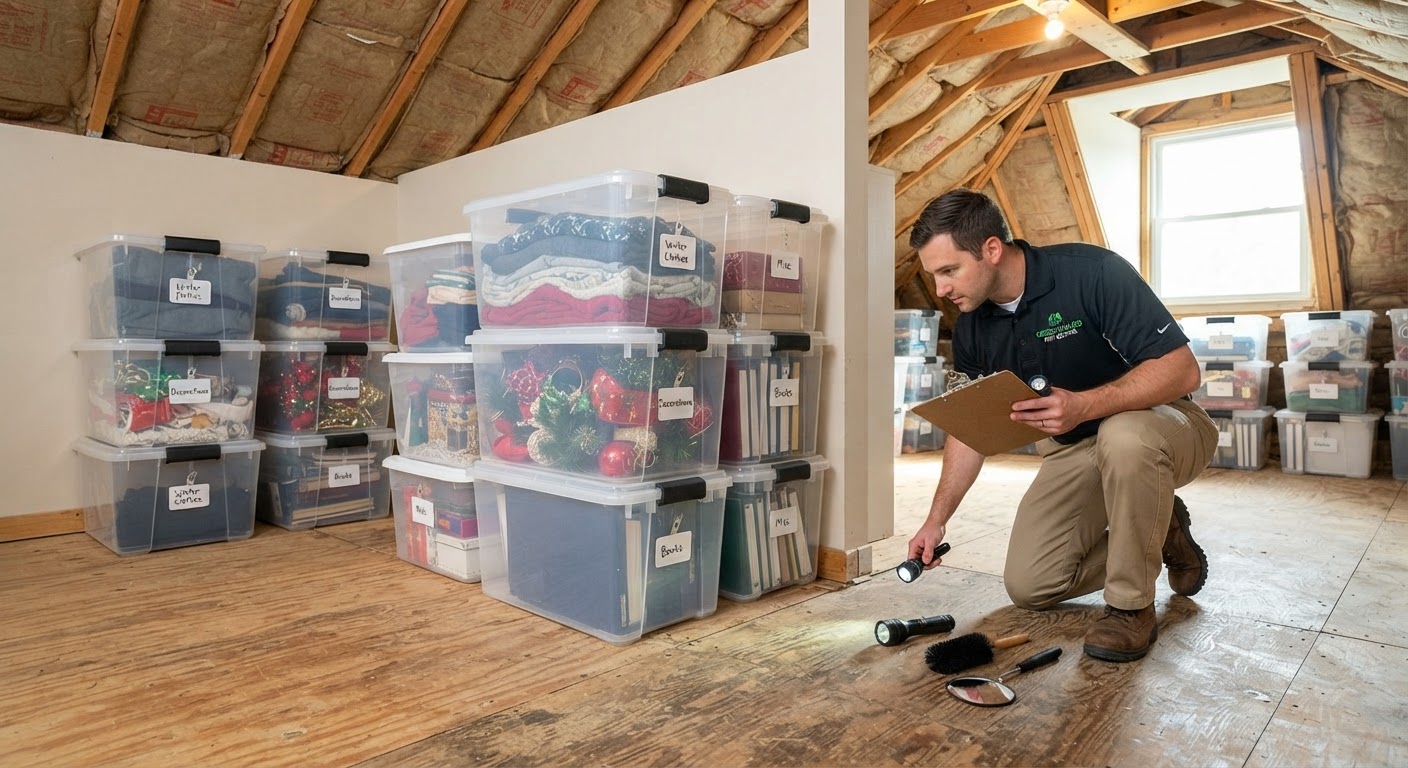
Attics filled with rolled or blown-in insulation, stored boxes, and unused seasonal equipment provide ideal harborages. Recluses frequently nest underneath fiberglass batts or inside the corrugated flutes of cardboard boxes. Similarly, crawl spaces under homes—common in Middle Tennessee architecture—provide sheltered entry points, especially if humidity levels support populations of silverfish, crickets, or beetles upon which recluses feed.
Storage Areas and Closets
Linen closets, basement storage shelves, and under-bed clearance zones are secondary havens. Brown recluses are known for slipping inside clothing that has been hung for months without use, between folded blankets, or into footwear stored on closet floors. Piles of laundry left on the ground provide temporary daytime shelters for wandering males seeking mates or hunting.
Wall Voids and Structural Gaps
Because they are thin-bodied, brown recluses easily navigate gaps behind baseboards, openings around plumbing lines under sinks, and the empty spaces inside hollow-core doors or drywall cavities. They build irregular, messy, off-white webs designed not to capture airborne insects, but rather to serve as daytime retreat hammocks and egg-sac nurseries.
Health Risks Associated with Brown Recluse Bites
Brown recluse venom is cytotoxic, meaning it destroys cellular tissue. While the majority of brown recluse bites heal cleanly without significant medical complication, bites can occasionally cause localized necrosis (tissue death) or, in rare instances, severe systemic reactions.
The Bite Experience
Most bites occur defensively when a spider is inadvertently trapped against human skin—such as when putting on stored boots, slipping into a work shirt, or rolling over in bed. The initial bite is often painless or feels like a mild pinprick, meaning victims may not realize they have been bitten until several hours later.
Progression and Symptoms
Within two to eight hours, the bite site often becomes red, swollen, and tender. Over the next day or two, a small blister or a "bullseye" appearance—featuring a central blister surrounded by a pale ischemic ring and an outer red margin—may develop. In severe cases, the central area darkens into a blue-black sunken lesion as the underlying tissue breaks down, requiring medical intervention.
It is worth noting that medical professionals frequently point out that many skin conditions initially attributed to brown recluse bites are actually bacterial infections, such as MRSA, or bites from other arthropods. If you suspect you have been bitten and observe spreading redness, intense pain, or fever, seek evaluation from a healthcare provider promptly.
Practical Safety Tips for Homeowners
Living alongside brown recluses in Tennessee requires practical habits designed to minimize accidental encounters:
- Upgrade storage containers: Replace cardboard boxes in attics, closets, and basements with durable plastic bins featuring tightly sealing lids. Cardboard emits pheromone-like odors and contains voids that attract these spiders.
- Inspect and shake out clothing: Always shake out work shoes, boots, jackets, and seasonal garments that have been stored for extended periods before putting them on.
- Keep beds detached from walls: Pull bed frames a few inches away from walls and remove bed skirts that touch the floor, eliminating easy climbing routes for ground-hunting spiders.
- Clear perimeter clutter: Remove firewood piles, scrap lumber, and dense leaf debris directly adjacent to your home's foundation to deter spiders from migrating indoors.
- Deploy sticky monitors: Place flat glue boards along baseboards, behind toilets, and inside closet corners. While not a standalone eradication method, sticky traps are invaluable tools for monitoring population density and confirming activity.
Professional Management of Brown Recluse Infestations
Managing a brown recluse population is distinct from addressing other household pests. Because these spiders have long legs that keep their bodies lifted off surfaces, they absorb less residual product than crawling insects when walking across treated floors. Additionally, their ability to survive for months without food makes patience and targeted treatments necessary.
Effective remediation relies on an integrated approach: thorough inspections of hidden voids, targeted applications to attics and wall cavities, crawl space management, and continuous population monitoring. If you suspect brown recluses have taken up residence in your home, professional guidance ensures that treatments are placed safely and strategically where these secretive spiders actually live.
Protect Your Nashville Home
If you have spotted brown recluse spiders in your attic, closets, or living spaces, contact Copper Wren Pest Control. Our residential pest control services provide thorough inspections and targeted management strategies designed to keep your Nashville home safe and comfortable.
Need help from Copper Wren Pest Control?
Contact our team to discuss your service needs in Nashville and surrounding service areas.