The Damp Foundation: Why Crawlspace Humidity Fuels Chronic Pest Problems in Nashville
Excess moisture under your home does more than rot floor joists. In Middle Tennessee, high crawlspace humidity acts as an open invitation for subterranean termites, camel crickets, and rodents.
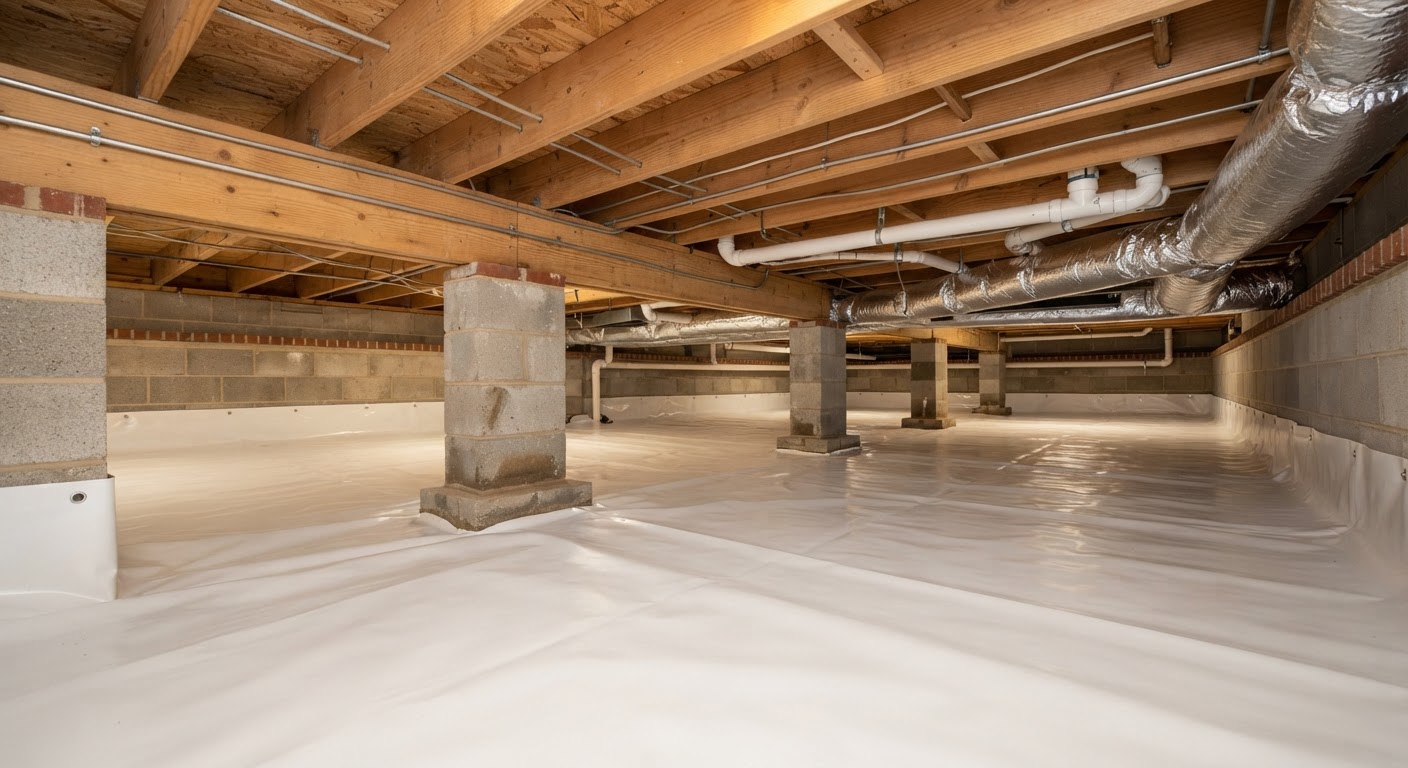
For many homeowners in the Nashville area, pest control feels like an ongoing skirmish that never quite gets resolved. You might clear out ants from the kitchen counter or set traps for the occasional mouse behind the pantry, only for another wave of invaders to surface a few weeks later. When pest activity becomes a constant background issue rather than an isolated seasonal event, the problem rarely starts in the living areas. More often than not, the true engine driving the cycle sits beneath your feet in the crawlspace.
Middle Tennessee’s climate presents a particular challenge for crawlspace foundations. Our long, humid summers, frequent spring rainfall, and dense clay soils work together to create an environment where moisture easily accumulates beneath residential structures. Left unmanaged, a humid crawlspace transforms from a structural buffer into a massive, sheltered habitat where invasive species feed, breed, and thrive.
The Anatomy of Crawlspace Moisture in Middle Tennessee
To understand why crawlspaces in Nashville become pest magnets, it helps to look at the regional environment. Middle Tennessee features heavy clay soil that drains slowly after periods of prolonged rain. When heavy precipitation hits, water can pool against foundation walls or seep inward through porous masonry block and mortar joints.
During the warmer months, outdoor air carries exceptional moisture. Traditional crawlspaces were designed with open foundation vents intended to let air flow through and carry moisture away. However, physics often works against this design in the Southeast. When hot, humid ambient air enters a crawlspace, it encounters cooler temperatures maintained by the shaded ground and air-conditioned floorboards above. As this warm air cools down, its relative humidity spikes. Once relative humidity crosses approximately 70 percent, condensation begins to form on structural framing, plumbing pipes, ductwork, and foundation perimeter walls.
This persistent dampness creates ideal conditions for wood rot fungi, organic decomposition, and a wide array of pests that require high humidity to survive.
The Stack Effect: How Under-Home Problems Travel Upward
A crawlspace is not isolated from the rest of your home. Buildings behave naturally like chimneys through a physical phenomenon known as the stack effect. Warm air inside the living areas rises and escapes through upper-level windows, attic vents, and small structural seams. As that air exits, it creates negative pressure on the lower levels, pulling replacement air up from the lowest point of the structure—the crawlspace.
Building scientists estimate that a substantial percentage of the air you breathe on the first floor originates directly within your crawlspace. Along with that air comes elevated humidity, mold spores, and the chemical scent trails left behind by pests. When damp crawlspaces become overcrowded with insects or rodents, the pressure pushes them upward through utility chases, gaps around plumbing, baseboard seams, and HVAC registers.
Pests That Rely on Crawlspace Humidity
Different pests target damp crawlspaces for different reasons. For some, moisture is necessary for biological survival; for others, the crawlspace provides an abundant food web fueled by decaying organic matter.
Subterranean Termites
Subterranean termites are a constant concern across Middle Tennessee. Unlike drywood species, subterranean termites require continuous access to moisture to keep their soft bodies from dehydrating. They live primarily in the soil and build mud shelter tubes to reach above-ground food sources.
When a crawlspace maintains high ambient moisture, wood framing absorbs that ambient water, increasing its moisture content. Termites are naturally drawn to damp, softened wood, which is significantly easier to excavate and consume than dry structural lumber. In extreme cases, persistent condensation allows subterranean termites to establish satellite colonies above ground without having to return to the soil for water, accelerating structural damage.
Camel Crickets (Cave Crickets)
Often referred to as cave crickets or "sprickets," these wingless, jumping insects are notorious throughout the Nashville area. Camel crickets lack the protective waxy coating that keeps many other insects from drying out, which means they can survive only in damp, dark, high-humidity environments.
A humid crawlspace serves as an ideal sanctuary. Camel crickets reproduce prolifically in damp subfloors and beneath fallen insulation. While they do not bite humans, their erratic jumping behavior causes alarm when they inevitably migrate into first-floor living spaces, laundry rooms, and basements. Furthermore, dense populations of camel crickets act as a primary food source that attracts larger predators into the foundation, including spiders and rodents.
Silverfish and Booklice
Silverfish and booklice (psocids) feed on microscopic mold, mildew, starch, and decomposing matter. When subfloor joists and paper-backed fiberglass insulation stay damp, surface molds rapidly develop. These microscopic fungi provide an unending buffet for moisture-loving nuisance insects. Once established in the subfloor, silverfish easily follow interior partition walls up into bathrooms, pantries, and closets.
Mice and Rats
Rodents require three things to establish an infestation: food, shelter, and water. A damp crawlspace provides all three. Puddles or high condensation yield a reliable water supply, while fallen fiberglass insulation creates ready-made nesting material. The presence of large insect populations offers supplemental protein. Once settled under the foundation, rodents chew through wiring, damage flexible ducting, and leave droppings that contaminate the air circulated through the living spaces.
Signs Your Crawlspace Is Driving an Infestation
Homeowners often treat surface-level symptoms without realizing that the root cause lies below the subfloor. You may have a crawlspace humidity issue contributing to pest activity if you notice any of the following warning signs:
- Recurring camel cricket sightings: Finding multiple cave crickets in your ground-floor living areas usually indicates hundreds or thousands more directly beneath the floorboards.
- Cupping or warped hardwood floors: High humidity beneath the floor causes the bottom of the wood planks to expand faster than the top, creating curved, uneven floorboards.
- Musty odors near floor registers: If air moving through your HVAC system or coming up around floor trim smells stale and earthy, organic growth is occurring in the crawlspace.
- Fallen or sagging fiberglass insulation: When insulation absorbs heavy moisture from humid air, it becomes heavy, loses its insulating value, and pulls away from the subfloor, creating harborage for nesting pests.
- Visible mold or white efflorescence: White, chalky mineral deposits on concrete blocks (efflorescence) indicate that water is migrating through the masonry, while visible fungal growth on wood joists confirms sustained relative humidity above acceptable levels.
Breaking the Cycle: Long-Term Management
Spraying insecticide on baseboards inside the home will not eliminate an infestation fueled by crawlspace moisture. Long-term management requires addressing both the pests and the environmental conditions that support them.
Moisture Mitigation
Controlling crawlspace humidity begins with managing exterior water. Gutters must be kept clear, and downspout extensions should direct roof runoff several feet away from the foundation. The surrounding landscape should slope away from the home to prevent surface water from collecting against the perimeter walls.
Inside the crawlspace, bare dirt floors should be fully covered with a heavy, continuous vapor barrier to stop ground water evaporation. In many Middle Tennessee homes, closing exterior vents and installing a dedicated commercial crawlspace dehumidifier is the most reliable way to maintain subfloor moisture levels below the threshold required by wood-decay fungi and moisture-dependent pests.
Targeted Pest Management
Once environmental conditions begin to stabilize, targeted treatments can successfully collapse active colonies. Termite control systems, such as non-repellent liquid soil treatments or proactive baiting stations, establish a perimeter barrier that protects vulnerable structural elements. Targeted crawlspace applications eliminate established cricket and insect populations, while mechanical exclusion closes the small gaps around foundation vents, crawlspace access doors, and pipe penetrations that rodents use to gain entry.
Protect Your Home from the Ground Up
A pest problem inside your home is frequently a symptom of an uncontrolled environment underneath it. By recognizing how Middle Tennessee's humidity interacts with your foundation, you can take meaningful steps to protect both your living space and your home's structural integrity.
If you suspect crawlspace humidity is behind the recurring pest problems in your Nashville home, Copper Wren Pest Control provides thorough inspections, targeted treatment plans, and practical guidance to help you regain control. Reach out to Copper Wren Pest Control today to schedule your crawlspace evaluation.
Need help from Copper Wren Pest Control?
Contact our team to discuss your service needs in Nashville and surrounding service areas.